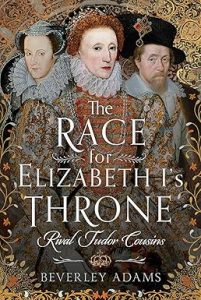
‘The Race for Elizabeth I’s Throne’ by Beverley Adams was published last year by Pen and Sword.
Beverley’s other books include ‘The Tragic Life of Lady Jane Grey’ and is also the author of ‘The Forgotten Tudor Royal: Margaret Douglas, Grandmother to King James VI & I.’
Buy ‘The Race for Elizabeth I’s Throne’:
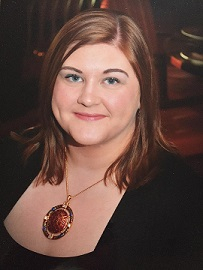
Follow Beverley on Social Media:
Website – Beverley Adams
Twitter/X – @WriterBeverleyA
Many thanks to Beverley for answering my questions.
Why did you choose this subject for your book?
I first began exploring the question of the Tudor succession while writing my book on Lady Jane Grey. Elizabeth I’s decision never to marry had always intrigued me, and it felt only natural to delve more deeply into how that choice shaped the succession that followed. The anxiety Elizabeth’s refusal caused among her advisors was unmistakable. They simply could not comprehend why their queen would not marry and secure an heir—after all, they saw it as her duty. That resistance made her choice far braver than I had initially appreciated, and it made me want to explore the deeper reasons behind her decision.
What does your book add to previous works covering this topic?
My earlier books on Margaret Douglas (The Forgotten Tudor Royal) and Lady Jane Grey (The Tragic Life of Lady Jane Grey) each explored a potential claimant to the throne—one Catholic, one Protestant. In this new book, along with others, Margaret and Jane’s sister Katherine take centre stage in the succession debate which perhaps they hadn’t perhaps featured heavily in the debate. Having already studied their lives in depth gave me a clearer sense of just how seriously both women were regarded as possible future queens. It was also surprising to learn that Elizabeth I never actually gave verbal consent to James being her successor which up until recently may believed was the case.
What surprised you most writing this book?
I’m always uncovering surprises in my research, but for this book the real revelation was just how many viable claimants there actually were—and how narrowly England missed having a Queen Arbella instead of a King James. It’s easy to assume James’s accession was a foregone conclusion or that he was the only realistic successor, yet the evidence shows that the situation was far more contested than many realise.
If Elizabeth I had died of smallpox in 1562, do you think Katherine Grey would have succeeded her?
I think it was entirely possible. Katherine enjoyed genuine support for her claim at the English court and among the Protestant faction. Yet, as so often in this period, religion complicated everything. The Catholic faction had its own preferred candidates—most notably Mary, Queen of Scots, and, from outside the immediate English line, Margaret Douglas, Countess of Lennox, who herself had come remarkably close to succeeding Mary I.
Why did Arbella marry William Seymour (grandson of Katherine Grey)? Did she plan to challenge James for the throne? Why else would she have made such a controversial choice?
I believe she truly loved him, and after such an unhappy, isolated upbringing she longed for a family of her own. I don’t think she ever intended to challenge James for the throne; she understood her place at court all too well. She must have known she could never hope to unseat a reigning king, especially one with heirs and especially as support for her claim was not forthcoming. In the end, I believe Arbella just wanted happiness. Tragically, she was denied that as well.