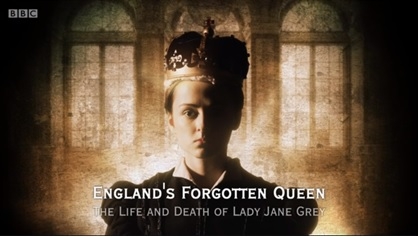
‘Professor Suzannah Lipscomb goes in search of the truth about Lady Jane Grey, the young Tudor claimant who was Queen of England for less than 2 weeks. Moving beyond the popular image of Jane as a hapless victim placed on the throne by her cousin Edward VI and her manipulative father-in-law the Duke of Northumberland, Suzannah challenges the mythology surrounding Jane, typified by Paul Delaroche’s famous painting of her execution.
The series explores Jane’s short life through extraordinary examples of her own writing, her exceptional education and her self-assured personality.’
Episode 2 Highlights
Suzannah Lipscomb – ‘On the 25th May 1553, Durham House in London witnessed a remarkable event. Lady Jane Grey came here to marry Lord Guildford Dudley. The marriage at Durham House was no ordinary Tudor wedding. In the dying days of King Edward VI, this union would join together two of the most powerful families in England.

In late May 1553, the 15-year-old King, Edward VI was plagued by a fever…This was probably when he amended his Devise for the Succession with a stroke of a pen. To make Jane his heir unless and until she had male children.

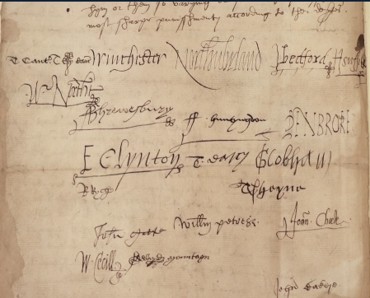
On the 15th June 1553, 24 councillors and judges solemnly swore that they would uphold the King’s succession plan.
On Sunday 9th July 1553, Jane received a mysterious summons to Syon House. Three days earlier on 6th July, King Edward VI had died. Here in the Long Gallery at Syon House, Jane met a group of the most senior noblemen in the land. She was told the shattering and stunning news, not only had her cousin, King Edward VI died, but he had nominated Jane to succeed him. It was not a role that she had sought, and it must have been an enormous burden for the young woman.

Jane’s father-in-law, John Dudley, the Duke of Northumberland, looms large in this story of her succession to the throne. What is the public perception of the Duke of Northumberland?
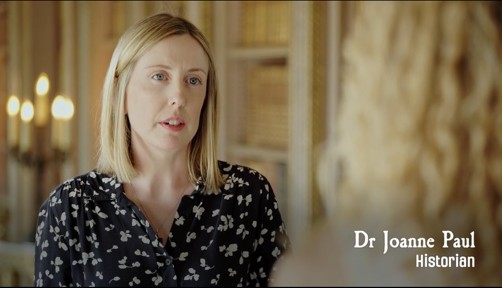
Joanne Paul – John Dudley becomes deeply unpopular in the few years before Jane comes to the throne. He’s unpopular with Londoners. He’s unpopular in the counties and he’s unpopular in the council itself…He’s seen as a tyrant, as an ambitious manipulator. Someone who takes this poor, helpless 17 year old girl and leads her to the slaughter.

Suzannah Lipscomb – Do you think that’s true?
Joanne Paul – No, I don’t think it is true. I think he saw himself as executing the will of the King….He’s a really good statesman. He solves a lot of the problems that had been plaguing the reign of Edward VI, including the finances. Had that term been longer, we have might have see a real turnaround for the English crown. I think his role in crushing rebellions, definitely turns the popular imagination against him. There’s this fascinating letter that we have from John Dudley, a year before the Jane Grey affair, almost to the day. And he says himself that he will serve out of duty and of earnestness. He will serve without fear, and he will do so because he knows that men can only kill the body. But if he serves according to his duty, he will save his soul.
Suzannah Lipscomb – Mary was the heir Edward had sworn to exclude because he considered her illegitmate and feared she would undo his Protestant Reformation. But as soon as Mary heard of Edward’s death, she got to work.

Suzannah Lipscomb – It is dated the 9th July 1553, and it is sent from Mary’s Manor at Kenninghall. It is signed Mary the Queen, and it’s sent to Edward Hastings. And that date, the 9th of July, it is the very day that Jane learned that she was queen at Syon House. It is before Jane is proclaimed as Queen is London, and Mary is claiming that she is the Queen…So she is stating the basis on which she is his heir, which is the Act of Succession of 1544. Henry VIII’s last will and testament of 1547.
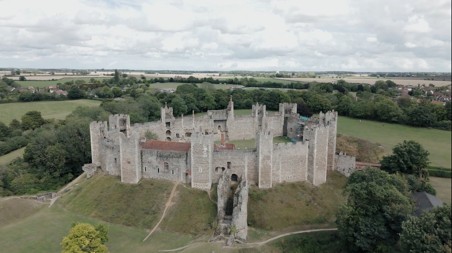
Suzannah Lipscomb – Mary’s move to Framlingham Castle, just two days after Jane had entered the Tower, transformed her into a formidable rebel leader….You’re suggesting that it’s actually her relationship to other lords and to tenants in this area that’s crucial.

Anna Whitlock – Absolutely. And that’s what Northumberland had massively underestimated…And Lady Jane didn’t have a household following and didn’t have a regional power base in the way that Mary did. And that was ultimately crucial in those early days. She was next in line by Act of Parliament, and that was crucial. She was Henry’s heir and legitimacy was her trump card.
Suzannah Lipscomb – What about religious sentiment?
Anna Whitlock – She won support on playing down her Catholicism and actually playing up her legitimacy…Mary played it very carefully so that whether you were a Protestant or a Catholic, you could come in behind her.
Suzannah Lipscomb – This is a key moment in history, which is a battle between 2 women.
Anna Whitlock – What’s really interesting is over these days, in July, gender wasn’t an issue…It wasn’t about whether a female could inherit the throne. Because of course, both the main claimants were women.

Suzannah Lipscomb – Northumberland’s six war ships were stationed in the North Sea off the coast of Suffolk, but then a dangerous north easterly wind overturned his plans…This estuary was the unlikely location of a decisive turning point in the battle between Mary and Jane. Because of the storm five of Northumberland’s six royal ships were forced to take shelter here.
Henry Jeringham, a member of Mary’s household, learned of the stranded ships in a local tavern and seized the moment. He rode up to the harbour and somehow persuaded the disgruntled captains and crew to switch their allegiance to Mary.

Suzannah Lipscomb – Stephan, what do you think the strategic and the symbolic significance was of this mutiny for Jane’s side?
Stephan Edwards – It indicated that Jane had very little support from the common people.
Suzannah Lipscomb – Queen Jane had begun to assert her unexpected power, challenging the men who had placed her on the throne…When the Lord High Treasurer brought Jane her crown, he urged her to try it, and suggested, as Jane later recounts, that another be made to crown her husband. In that moment, the penny seems to have dropped, that her accession meant the elevation of the Dudley’s. Jane’s response was swift and absolute. She vetoed it….It was an extraordinary act of power and independence by England’s young Queen.
On the 16th of July news of the naval defection sent shockwaves through the council and reports of Mary’s rapidly growing support in the countryside rattled them even further…She ordered that a strong guard be mounted round the Tower and that the council be locked in with her. She had the keys delivered to her personally. It was a remarkable show of authority. As Queen, Jane played her cards well. But she could not change the hand she had been dealt.
Suzannah Lipscomb – Was Jane legally queen?
Joanne Paul – If you had asked anyone in England who didn’t want to be called a traitor in the days after Edward VI’s death, the answer would have been Jane. And that legally would have been correct. If you had asked anyone in England who didn’t want to be called a traitor after Mary I comes to the throne, the answer would have been Mary was Queen after Edward’s death. And that would have been legally correct.
Suzannah Lipscomb – And actually, that act of 1544 says that the monarch can decide by letters patent.
Joanne Paul – And that is what happens. It’s a very rushed affair. But Edward’s will, his device is approved. It is declared by letters patent. And so there’s no reason that Jane couldn’t have been Queen legally. And so erasing her from the succession…there’s no reason to do that, except for the very successful propaganda campaign that Mary runs after she becomes Queen.

Suzannah Lipscomb – On the 13th November, she finally emerged from the Tower. But she wasn’t free. She was heading to her trial…She was made to walk the stark one mile to London’s Guildhall. This was a deliberately humiliating public spectacle, designed to demonstrate Mary’s total victory over Jane, over traitors and over Protestantism itself.
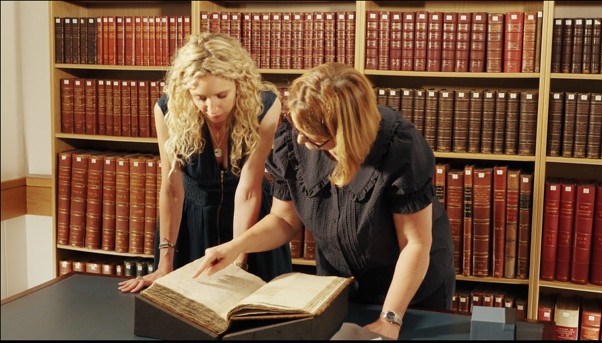
Andrea Clarke – Letter that Jane wrote to Thomas Harding, her former tutor. Jane had been informed that he had abandoned his Protestantism due to fear of persecution…I think where Jane’s faith was concerned, compromise was not an option. And so she is writing to reprimand him in the strongest terms. This letter is full of passion and conviction. She was imprisoned. She was completely powerless. And so she’s channelling her intellectual energy. But also, I think it is an act of defiance.
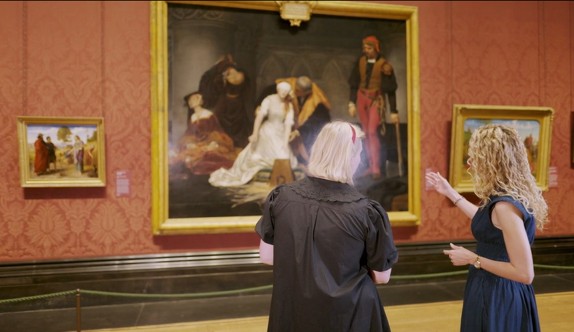
Verity Babbs – So this detail, that Lady Jane Grey in a slight panic, asks, you know, what shall I do? Where is the block? Was added in several years after the execution in a Protestant Book of Martyrs..Lady Jane Grey ends up being framed as a bit of a wet flannel in history, but actually there are lots of parts of her rule that demonstrate a real strength. You know, denying Guildford the title of King, signing her letters Jane the Queen.
Suzannah Lipscomb – Scraping away the layers of myths that surround her reveals a far more interesting, brilliant and self-aware person then the helpless victim the cliches suggest. Jane’s story reveals a young woman of formidable intellect, a woman of remarkable strength of character. And I think it speaks to the nature of Tudor womanhood. We have someone who was a pawn in a patriarchal age, but also someone who demonstrated wit and resolution and agency in the face of those circumstances.’