The paperback of ‘Heroines of the Tudor World’ by Sharon Bennett Connolly is published today.
Here is my 2024 interview with Sharon.

The paperback of ‘Heroines of the Tudor World’ by Sharon Bennett Connolly is published today.
Here is my 2024 interview with Sharon.
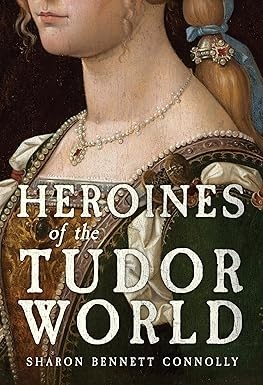
‘These are the women who ruled, the women who founded dynasties, the women who fought for religious freedom, their families and love. These are the women who made a difference, who influenced countries, kings and the Reformation.
Heroines of the Tudor World focuses on the women who lived through the Renaissance and Reformation, examining the threats and challenges they faced and how they overcame them. Studying regents, writers, nuns and queens, and taking in the likes of Elizabeth Barton, Anne Boleyn, Catherine de Medici, Bess of Hardwick and Elizabeth I, Sharon Bennett Connolly shines the spotlight on the women who helped to shape Early Modern Europe.’
Further details Amberley Publishing
Elizabeth Norton (author of ‘The Lives of Tudor Women’)

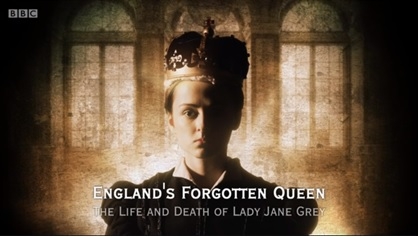
Edward VI died on 6 July 1553 and Mary I was proclaimed on 19 July 1553, with a gap of thirteen days that was filled by Jane’s queenship. She may have been formally proclaimed on 10 July, but if she wasn’t monarch during the four days that preceded this then who was? In accordance with the well known concept of ‘the king is dead, long live the king’, there is no interregnum when an English monarch dies. This was certainly the case when Henry VIII died only six years before – his death was initially kept secret, but still Edward technically reigned. If Jane was legitimately Edward’s heir then she became queen at the moment of his death. For that reason, I would absolutely give her a reign of thirteen days, even if Jane was not aware – initially – of her accession.
Joanne Paul (author of ‘The House of Dudley’)
Reigns traditionally begin with the death or deposition of the previous monarch, meaning that we need to date her reign’s beginning to 6 July, when Edward VI dies. Arguments could, I suppose be made for the 10 July when the proclamations go out, but this would go against the precedent of, for instance, Henry VIII, whose reign begins the day his father, Henry VII, dies, even though he is not proclaimed king for two days.
Jane has the support of the Council until the afternoon of the 19 July, when they declare for Mary. Her reign is effectively over at that point.
Mickey Mayhew (author of ‘House of Tudor: A Grisly History’)

Firstly, Jane is famously the ‘9 days queen’ and in that vein I would stick with the official proclamation date and not the date when she arrived at the Tower. In the same fashion, her successor Mary Tudor was queen when proclaimed thusly by the Privy Council, not when she arrived at a specific venue.
Amy McElroy (author of ‘Mary Tudor: Queen of France’)
I believe Jane was queen for 13 days. If we look at other reigns within the Tudor period they all begin on the date the former monarch died, not the date of the proclamation. Edward VI died on 6 July 1553 and at that point the council began acting as Jane’s council even whilst she was unaware she was too become queen. Although he proclamation was not made until 10 July I believe she was queen for 13 days.