My website was 25 years old on 2 September.
To celebrate I asked historians and authors who have contributed to this site over the years….
2. Should Jane be known as Queen Jane or Lady Jane?
Beverley Adams (author of The Tragic Life of Lady Jane Grey)
Well, she was proclaimed Queen, so yes, that is how she ought to be known. I am pleased to see many historical sites including her on their ‘Kings & Queens’ merchandise, so I think there has been a gradual movement towards accepting her as Queen. Many would argue that the fact she wasn’t crowned means she wasn’t a true queen, but neither was Edward V or Edward VIII, yet they are both referred to as kings.
Laura Brennan (author of Elizabeth I: The Making of a Queen)

Even though Jane was never crowned and had a de facto rule, I truly believe she deserves the title Queen – she fulfilled that role and would forfeit her life for those nine days so should be part of the list of English monarchs, and should, in my view only be referred to as Lady Jane Grey prior her marriage and Lady Jane Dudley after marriage and after Mary’s accession.
Sharon Bennett Connolly (author of Heroines of the Tudor World)
Ah, that is an easy one. If Edward V is in the history books as king, even though he was never crowned, then so should Jane Grey be recognised as Queen Jane. And so should Matilda! Nuff said!
Heather Darsie (author of Anna, Duchess of Cleves: The King’s Beloved Sister)

She should be known as Queen Jane, in my opinion. Though her accession to the throne was incomplete due to her never being annointed, she was properly designated as Edward VI’s heir. Mary I essentially staged a coup, in some ways, to take back what Mary saw as her birthright.
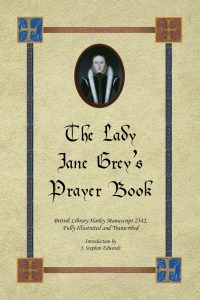
Stephan Edwards (author of Portraits of Lady Jane Grey Dudley, England’s ‘Nine Days Queen’)

A Lady or a Queen
Whether Jane Grey Dudley should be styled ‘Lady Jane’ or ‘Queen Jane’ depends largely on how much we defer to recognized governmental and other ‘official’ authorities, or whether we instead defer to tradition. My own opinion has changed as my research on Jane Grey Dudley and the succession crisis of 1553 has progressed.
I have argued in the past that Jane should be styled ‘Queen Jane’ on the grounds that numerous governmental and legal authorities number her among the monarchs of England.
• The National Archives of the United Kingdom maintains a separate section labeled ‘Queen Jane’ for storing certain types of official governmental records that survive from the period between 6 July and 19 July 1553. The National Archives is a non-ministerial department of the Government of the United Kingdom, therefore the reign of Queen Jane seemingly has official recognition from the government itself.
• The official website of the Royal Family recognizes and includes Queen Jane among the predecessors of the current king. Therefore, the Crown officially recognizes Queen Jane as a previous monarch of England.
• Certain authoritative law texts include Jane among the monarchs of England.
• The English government and bureaucracy operated between 10 July and 19 July 1553 in the name of and under the authority of Queen Jane. A handful of documents originating from entities not directly involved in the alteration of the succession survive to illustrate this point. They notably include courts-of-law transcripts indicating that the courts were convened in the name of Queen Jane, and the actions taken by those courts and other entities and recorded in those documents were never voided or reversed as ‘illegal’ or as having been undertaken without proper authority.
But my thinking has changed as I have considered the question more objectively over the past few years. These are the “cold hard facts”:
• Monarchs of England and the United Kingdom rule by consent of the people.
• The authority to govern the succession lies with Parliament as representative of the people, not with the Crown generally or with any sovereign individually other than Henry VIII. That monarch remains the only one explicitly authorized by Parliament to name his own successor (Second Succession Act).
• Parliament’s last ruling on the royal succession prior to the death of Edward VI was the Third Succession Act of 1544, and that statute law identified Mary Tudor as Edward’s rightful ‘next-in-line’ successor.
• Edward VI’s letters patent nominating Jane Grey Dudley as his successor were not legally valid, for a number of reasons.
• The people dissented from the rule of Queen Jane and instead rallied successfully to support Mary’s claim and to install her as their queen just nine short days after Jane was first publicly proclaimed as Edward’s successor.
If English monarchs rule only with consent of the governed, and if the governed consented to be ruled by Mary rather than by Jane, then the stipulations of the Third Succession Act of 1544 are determinative. The reign of Jane Grey Dudley was not legal, and she cannot rightly be counted among the monarchs of England. She should therefore be styled ‘Lady Jane Grey Dudley.’ And in a very rare example of accuracy in the traditional narrative on the life of Jane Grey Dudley, tradition inadvertently adopted that style. The majority of authors writing since 1554 has consistently referred to her not as ‘Queen Jane,’ but rather as ‘Lady Jane.’ In this instance, the tradition is correct.
Elizabeth Fremantle (author of ‘Sisters of Treason)

Technically Queen Jane is correct but I have to admit that I think of her as Lady Jane Grey, probably because that was what I was taught at school.
Helene Harrison (author of ‘Tudor Executions: Nobility to the Block)

Queen Jane. She may have only reigned for 13 days and was never crowned but other monarchs have t been crowned and are still considered monarchs – Edward V and Edward VIII, for example. She acted as queen, head of the Privy Council and signed documents as queen, and had the support of council. Legally it may have been questionable at the time, but had she triumphed over Mary I have no doubt the legalities would have been sorted, as with other usurping monarchs after the fact.
Christine Hartweg (author of ‘John Dudley: The Life of Lady Jane Grey’s Father-In-Law ’)

I don’t mind if people call her Lady Jane Grey, I do so myself. However, I think it’s also right to also call her Queen Jane, as she was de facto queen. There are documents she signed as Quene Jane. In her own understanding, and that of her council, she was of course de jure queen also, until they changed their minds under military pressure. I think historians should acknowledge that this was a civil war situation, like for example that of Queen Mathilda and King Stephen. In many countries it sometimes happened that there were several contenders for the throne at the same time, and they are usually counted as kings, emperors, or popes, by historians.
Richard Heath (author of ‘Killing Monarchs: Regicide in the Tudor and Stuart Age’)
As much as I attach no blame to Jane in the events of July 1553, she was essentially a usurper. That she was pushed into the situation and had never expressed any desire to become queen does not change that basic fact. As such I believe that the widely used name of Lady Jane Grey is correct, even though she could be regarded as having been queen for nine days. It is however interesting that many of the references to Mary’s reign give it as commencing in July 1553, without gives a specific date – either 6th July (Edward’s death) or 18th July 9 (her acceptance by the Privy Council).
Sarah Hodder (author of ‘The Woodville Women: 100 Years of Plantagenet and Tudor History’)
I think Jane has become known to history as Lady Jane Grey and that should remain; it takes nothing away from her story, and the fact that she did become queen of England. Queen Jane makes me think of Jane Seymour, Henry VIII’s third queen, and I think Jane Grey deserves the individual recognition that her name, Lady Jane Grey, brings her.
Gemma Hollman (author of Royal Witches: From Joan of Navarre to Elizabeth Woodville)

In my personal opinion, I think for the second question that she should be Lady Jane Grey. Although there are other monarchs without a coronation who are considered monarchs (looking at you, Edward V and Edward VIII), these were theoretically less contentious accessions, and whilst for example Edward V was not crowned, he was the clear heir and was considered and proclaimed king for months, so I think a lack of coronation in his case is not enough to warrant him not being considered a king. For Jane, however, the line of succession was not clear cut, with multiple different complications and potential claimants (thanks for your messy history, Henry) and Jane was just one of those, who made a claim, but was swiftly knocked aside. True, she was proclaimed queen, but I don’t think in her case this is enough to consider her a queen, considering how short-lived and contentious this was. But I certainly think it is an interesting argument, and I can understand those who think she should be considered a queen!
Matt Lewis (author of ‘The Survival of the Princes in the Tower’)

28th September
Paperback
I think I’d accept Jane being the nine-day queen. Usually, the next monarch would, after 1272, succeed immediately on the death of their predecessor. That is usually accompanied by an immediate proclamation. The delay in proclaiming Jane as queen between 6 July and 10 July points to the uncertainty over who was legally qualified to succeed. So, I think there was effectively an interregnum for four days until that question was (at least initially) settled.
Leanda de Lisle (author of ‘The Sisters Who Would Be Queen: The Tragedy of Mary, Katherine and Lady Jane Grey’)

‘She was Lady Jane DUDLEY – not Grey, since she was married, and not Queen, as she was never accepted as such by parliament as every monarch since Edward IV had been.’
Mickey Mayhew (author of ‘House of Tudor: A Grisly History’)

I do think she should be known as ‘Queen Jane’ but you’ll find perhaps that the ‘Lady Jane Grey’ tag will be hard to shift in popular public perception.
Amy McElroy (author of ‘Mary Tudor: Queen of France’)
Whilst most of us the reference Lady Jane Grey, she was proclaimed queen therefore regardless of the fact that she did not have a coronation, she was a queen. I believe Jane was queen for 13 days. If we look at other reigns within the Tudor period they all begin on the date the former monarch died, not the date of the proclamation. Edward VI died on 6 July 1553 and at that point the council began acting as Jane’s council even whilst she was unaware she was too become queen. Although he proclamation was not made until 10 July I believe she was queen for 13 days.
Elizabeth Norton (author of ‘The Lives of Tudor Women’)

British history does not have enough reigning queens, so I’m all for including both Jane and her distant predecessor, Empress Matilda. It is always pleasing to see one, or both of these remarkable women included in lists of monarchs. Jane’s reign was, of course, brief, and her legitimacy highly debatable, but for a brief moment she wore the crown. If we include Edward V (another uncrowned monarch whose claim to the crown was challenged) then there is no reason not to include Jane. For that reason, I think we should call her Queen Jane.
Joanne Paul (author of ‘The House of Dudley’)
Jane was proclaimed queen by the Council and recognised by (at least some) foreign powers. That is enough to make her queen (the precedent of Edward V is helpful here).
Lee Porritt (owner of Lady Jane Grey Revisited)

‘I suppose the answer to this question is if the individual believes that the reign of Queen Jane was lawful or not. Historians have been divided over this subject for many years, and the topic of what we call Jane today is a tricky one. She was born Lady Jane Grey, was referred to as Queen Jane for a short period of time and died Lady Jane Dudley on that cold February morning in 1554. However, today she is more commonly known by her maiden name. From the moment of her death there does appear to have been a conscious effort to disassociate Jane from the Dudley name. She is often referred to as ‘Jane of Suffolk’ or the ‘Usurper’ in contemporary documentation. Her marriage to Lord Guildford Dudley would last less than nine weeks, before both were imprisoned in the Tower of London, and their relationship was cut short in the saddest of ways. By the eighteenth and nineteenth century, the use of the name Lady Jane Dudley is almost obliterated from the history books, and the mythological character of Lady Jane Grey began to appear.
I do feel that Edward VI is underestimated slightly, in terms of the 1553 crisis. Blame is often pointed at others around him for the decision to make Jane Queen in place of his sister Mary. However, it needs to be remembered that Jane was in fact Edward’s forth choice to inherit the throne of England. The final copy of his Devise for the Succession has not currently surfaced, however, a draft copy has survived in Edward’s own hand, which is today stored at the Inner Temple Library, London. The original draft demonstrates that at the time of writing Edward had hope of life. He was initially attempting to avoid a Queen altogether, opting to leave the throne to any male heirs he may produce. The draft goes on to state that if he was to die without children, then the throne was to pass to the male heirs of Jane’s mother Frances Grey, and then the male heirs of Jane and her sisters. Sadly, for Edward time was an issue. His health was failing rapidly, and although Jane and her sister Catherine had been hastily married off there was insufficient time to produce the male child needed. The Devise was then changed, leaving the throne to Jane and her male heirs, excluding Frances altogether. In Edward’s final years, he was starting to show some of that ruthless determination displayed by his father Henry VIII, especially in matters relating to religious beliefs. Edward had a difficult relationship with his sister Mary, due to the divide in religion, and Mary continuing to practice mass when specifically requested not to.
In 1544, Parliament passed the Third Act of Succession identifying Mary as Edward’s rightful successor. Edward died before his Devise could be passed in Parliament and the 1544 Act of Succession suppressed. This then left Jane, the council, and others around her in a vulnerable position following his death. Although, her reign was initially recognised by the council and a long-winded proclamation was read aloud detailing her claim to the throne, Jane was almost unknown to the public. As we see from the events that played out during July of 1553, the 1544 Act of Succession recognising Mary as the rightful Queen was not forgotten.
It is my belief that when discussing her brief reign, Jane should be referred to as Queen. Due to Edward’s Devise not being passed through parliament and how events unfolded in England, we can identify that her reign was not completely lawful. However, England was ruled under the name of Queen Jane for a short period of time. Jane’s reign is listed among other Kings and Queens on the official Royal Family website, documents related to her time as Queen are stored under the name of ‘Queen Jane’ in our National Archives and A file concerning her iconography is also stored under the monarchy section at the National Portrait Gallery archive. This identifies that the reign is at least acknowledged by officials within the UK, however, until another Jane succeeds to the English throne, we will never truly know if she will be known as Jane I or Jane II.’
Linda Porter – (author of ‘Mary Tudor: The First Queen’)

Jane was certainly proclaimed queen and Cecil’s own notes refer to her first as Jana Regina and then as Jana Non-Regina. For the short period of time that she had conciliar support, she was Queen Jane. However, from a personal perspective, because she was never crowned, I don’t think myself that she should be referred to as Queen Jane.
Claire Ridgway (author of ‘The Fall of Anne Boleyn: A Countdown’)
I think she should be called Queen Jane. Her reign may have been shortlived, and Edward’s wishes may not have passed through Parliament, but he did get letters patent, and she was proclaimed queen. I don’t think it’s right to take that title away from her. She may not have sought it, but she accepted it as her destiny and as God’s wishes for her, and then threw herself into the role and was signing letters as queen and demanding allegiance. An incredible young woman.’
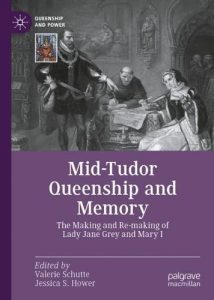
Valerie Schutte (editor of Mid-Tudor Queenship and Memory: The Making and Re-making of Lady Jane Grey and Mary I)
Jane Grey should be known as Lady Jane, and if we want to be more accurate, perhaps Lady Jane Dudley.
For those in favor of Jane being Queen of England, it is possible to argue that Mary Tudor was legally a bastard and unfit to become queen. For those in favor of Mary being Queen of England, it is possible to argue that Jane was no more than a pawn in a larger political game and was not legally able to become queen because of the succession statutes previously agreed to in Henry VIII’s reign.
Sylvia Soberton (author of Rival Sisters: Mary & Elizabeth Tudor)

I think she should be known as Queen Jane because she was officially proclaimed queen and accepted the role, even though her reign was very short. She exercised royal authority for a brief period, so the title “Queen Jane” better reflects her place in English history.
Melita Thomas (author of The House of Grey: Friends & Foes of Kings)

Undoubtedly, Lady Jane.
Jane was not queen under common law – even supposing Mary and Elizabeth did not count, and excluding Mary Queen of Scots as not qualifying as born out of the jurisdiction (debatable, but possible) the heir at common law would have been Margaret, Countess of Lennox, followed by her two sons, then Jane’s mother.
She was not queen under statute. That clearly settled the succession on Mary then Elizabeth.
Edward’s device and letters patent had no legal power to overturn statute. Henry VIII could not have left the throne away from Mary and Elizabeth by will, as it had been settled by statute. He only had the right to nominate an heir after Elizabeth, once the 1544 Act was passed.
Kathryn Warner (author of The Granddaughters of Edward III)

I’d say Queen Jane, using the precedent of Edward V in 1483, who was never crowned but is still called ‘Edward V’ and listed among our monarchs, so I’m not sure why Jane isn’t.
Sarah Beth Watkins (author of The Tudor Brandons)

Jane was officially proclaimed queen but was never crowned – does that mean she wasn’t queen? During her very brief time, she certainly acted like a queen, holding court and discussing government business, so yes, I do feel she was Queen Jane.
Janet Wertman (author of The Boy King)

I myself have always referred to her as Lady Jane Grey, but as I tried to justify why, I realized this was merely out of habit. She was proclaimed, she controlled the Tower and all it represented, and men died fighting for her. I will call her Queen Jane from here on out!